knowt
ROLE
UX Design
TEAM
Swapna Dhar, Liya Yan, Samiha Aarashi
DURATION
4 weeks
TOOLS
Figma, Adobe CC
Overview
Knowt is a free study platform that incorporated AI tools to help with studying. Our goal was to design engaging features that motivate users to study and maintain a streak of using the app.
Problem
Users find it difficult to maintain streaks on a studying platform, because they don't find studying fun or rewarding.
Solution
Knowt's new features makes studying feel fun and sociable, incorporating features that reward the user and socialization.
RESEARCH
Competitors
We started to research competitors that had similar services to Knowt and analyzed what they excelled at and what needed work.

Users like Khan Academy’s clear lessons and the ability to learn at their own pace for free.
However, some feel that the content can be too structured or rigid for casual learners.

Users love Duolingo for its gamified learning style that makes language learning fun.
However, some dislike that the app can feel repetitive and that certain features are locked behind paywalls.

Users like Quizlet’s huge library of study sets and the ability to create flashcards.
However, users have been frustrated now that most of Quizlet’s features are now locked behind a paywall.
Empathy Interviews
We interviewed students, asking them questions about studying and the use of learning apps.
We found that students get distracted easily, wish studying was fun, and don’t want to pay.
“I feel like I get distracted easily when I’m doing my homework.”
“I wish there was a way to make studying more fun.”
“I like to use Kahoot and Quizlet, but Quizlet became a paid subscription which kinda sucked, so I stopped using it.
User Needs
Fun incentives to study
Focused study environment
Social interaction while studying
User Pain Points
Paid subscription
Studying feels slow and boring
Limited social features
FEATURES
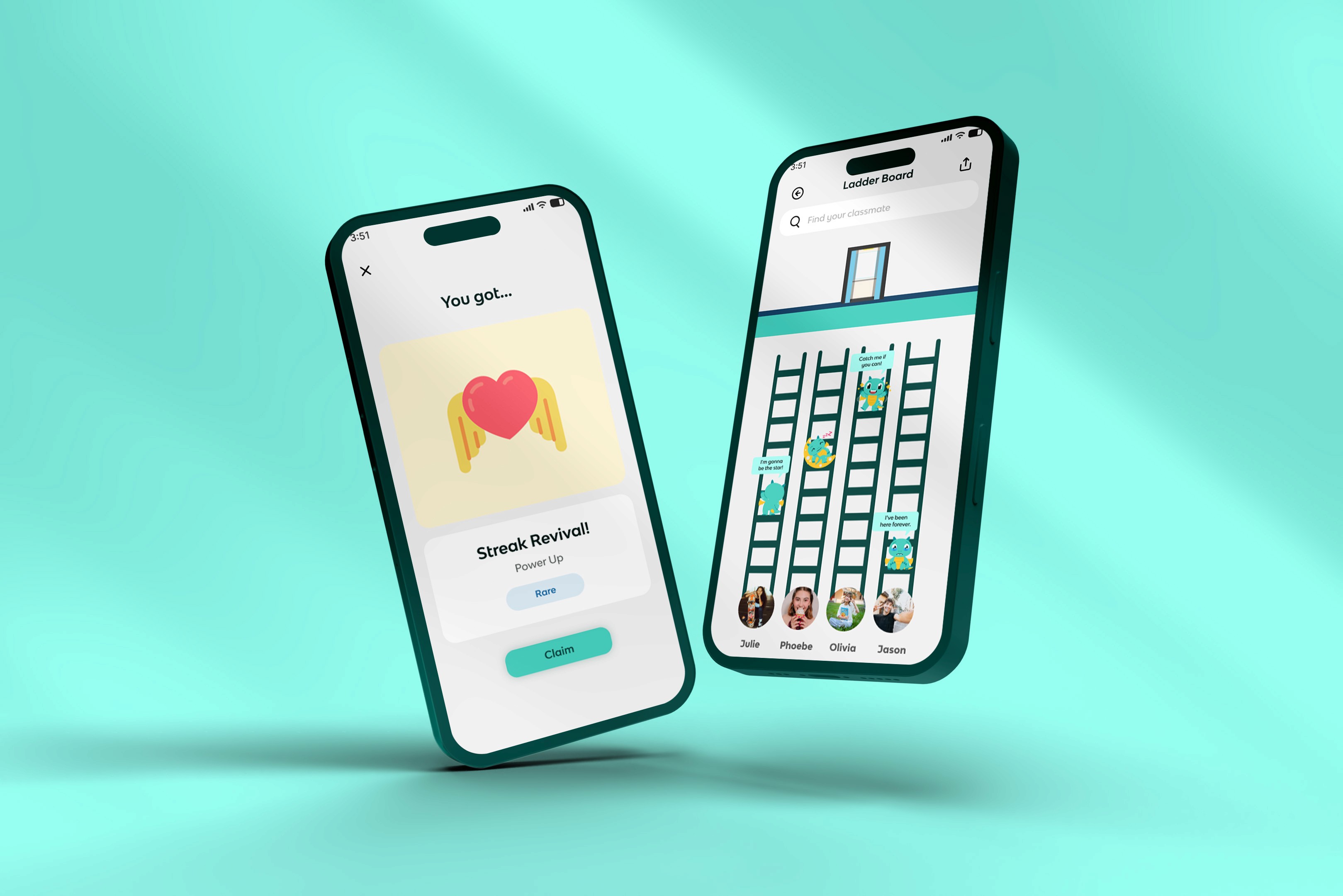
Magic Hat
Users can complete three challenges to unlock a random reward from the magic hat. Rewards are categorized as common, uncommon, rare, epic, and legendary.
Problem
High school students find it challenging to stay motivated while studying alone because it feels repetitive and lacks engaging rewards or excitement.
How it solves the user’s problem
The Magic Hat makes studying feel rewarding by adding an element of surprise and gamification through completing daily challenges, which gets users to come back daily and maintain their streak.
Ladderboard
Teachers can create a classroom and set up a “ladder” board, which students can join through a code and track their studying. Students can also check the class ranking and monitor their progress over time.
Problem
Students often struggle to engage with one another, which leads to a lack of interaction and a sense of isolation, resulting in decreased motivation and feeling unsure about their progress.
How it solves the user’s problem
Users are able to view past event turn out and share their own experiences, which manages their expectations and helps others get informed.
Study Pet
Users will have their own virtual pet to take care of by gathering points from studying. They can use those points to purchase accessories, outfits, and food for their pet.
Problem
High schoolers who don’t have anyone to study with struggle with motivation and lack someone to help them keep going.
How it solves the user’s problem
By creating check-able competitions, teachers can boost students' motivation and provide insights into how they can improve their study plans.
TAKEAWAYS
Key Performance Indicators
Here's how we can measure success:
Magic Hat
% of users who complete three challenges.
Difference in daily retention between users who claimed a reward and users who didn't.
Ladderboard
% of users joining a class ladderboard.
Number of students who are active and participate in the ladderboard.
Study Pet
% of users who start a study session to improve their pet's status or mood.
Average number of points earned and spent on pet items a week.
Project Takeaways
Here’s what I learned:
Emotional design matters
Creating visuals, satisfying animations, and adding positive reinforcement increases the likelihood of users returning the next day.
Progress needs to be visible
Adding streaks, progress indicators, and visual feedback creates a sense of momentum that users don’t want to break.
User testing reveals vital information
Through user feedback, I learned that struggling to keep a streak often comes from confusion, boredom, or lack of emotional payoff.